Future aerospace engineer. I lead engineering on an AI drone for cattle health and run a virtual flight school with 1,900 members. I'm still in high school.
Fig. 1. Hexacopter, top view. An illustration, not the SWARM airframe.
Featured
May 2026 to now
SWARM Technologies
Engineering lead, working with Texas A&M Prof. Bruce Neville
A student-built agricultural drone that enables early detection of screwworm wounds in cattle. I lead the engineering: turning ideas into system requirements, prototypes and test plans, and guiding component, structure and electronics decisions across several design iterations.
About 1/5
the cost of standard commercial systems
12+
Texas counties where we have demonstrated it
Shown to ranchers, agricultural agencies and university stakeholders.
Illustration of a survey sweep. Flagged animals turn orange.
Jun 2025 to now
FlyAwayVirtual.com
Co-founder and director, virtual flight school on VATSIM
I co-founded and scaled this flight school. I recruit and coordinate our Certified Flight Instructors, publish lesson plans and course content on Moodle, and run weekly staff meetings so every instructor teaches to the same standard.
1,900
members
+70%
membership growth
I oversee each student from onboarding through solo and advanced ratings, and built the Node.js and EJS backend on EC2 with PostgreSQL plus a Discord bot.
OnboardingSoloAdvanced ratings
Research
UT Austin, Computational Imaging Lab
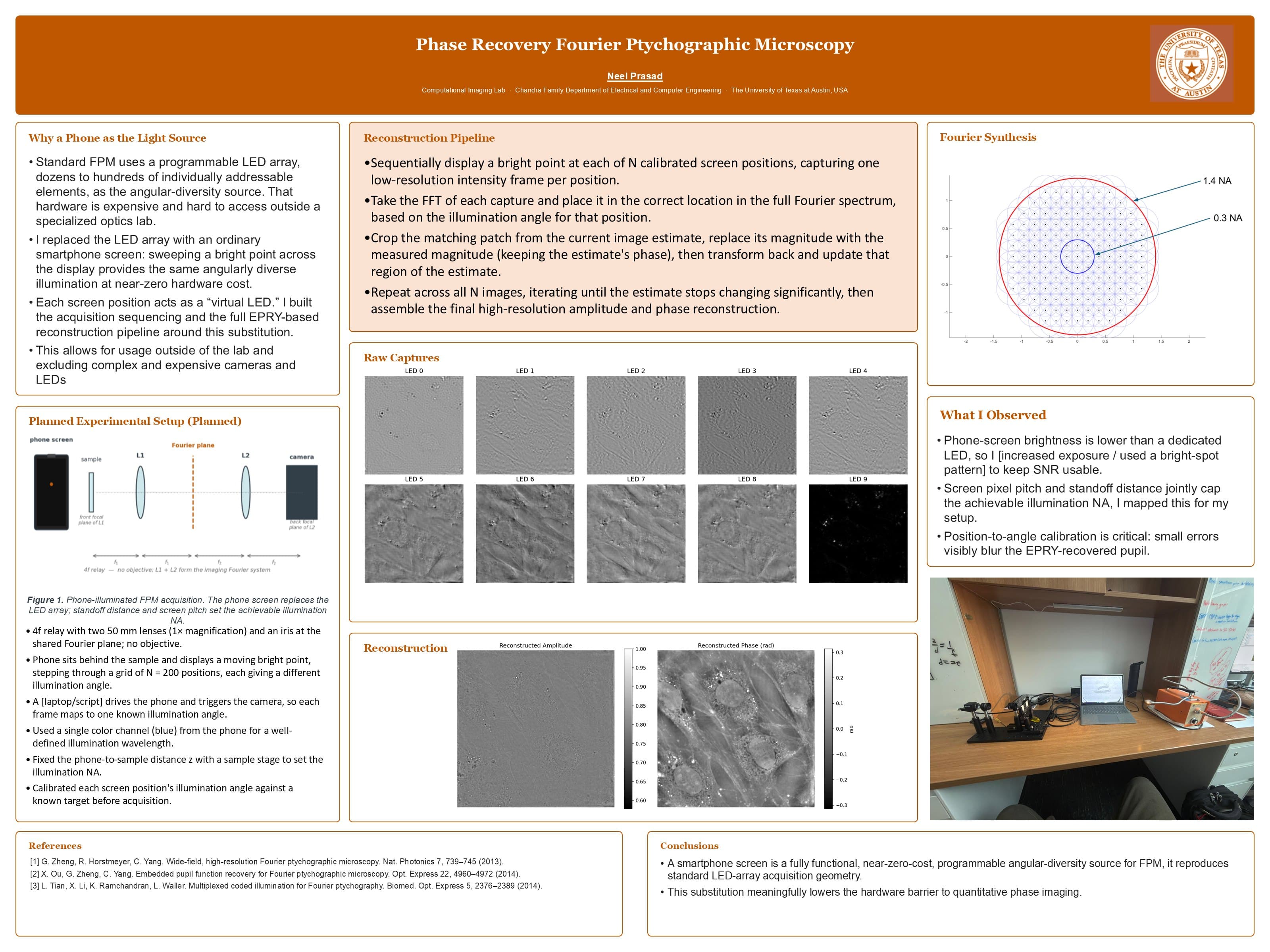
Phase recovery with a phone as the light source
Fourier Ptychographic Microscopy normally needs a programmable LED array. I replaced it with an ordinary smartphone screen, sweeping a bright point across the display to give the microscope the same range of illumination angles at near-zero hardware cost.
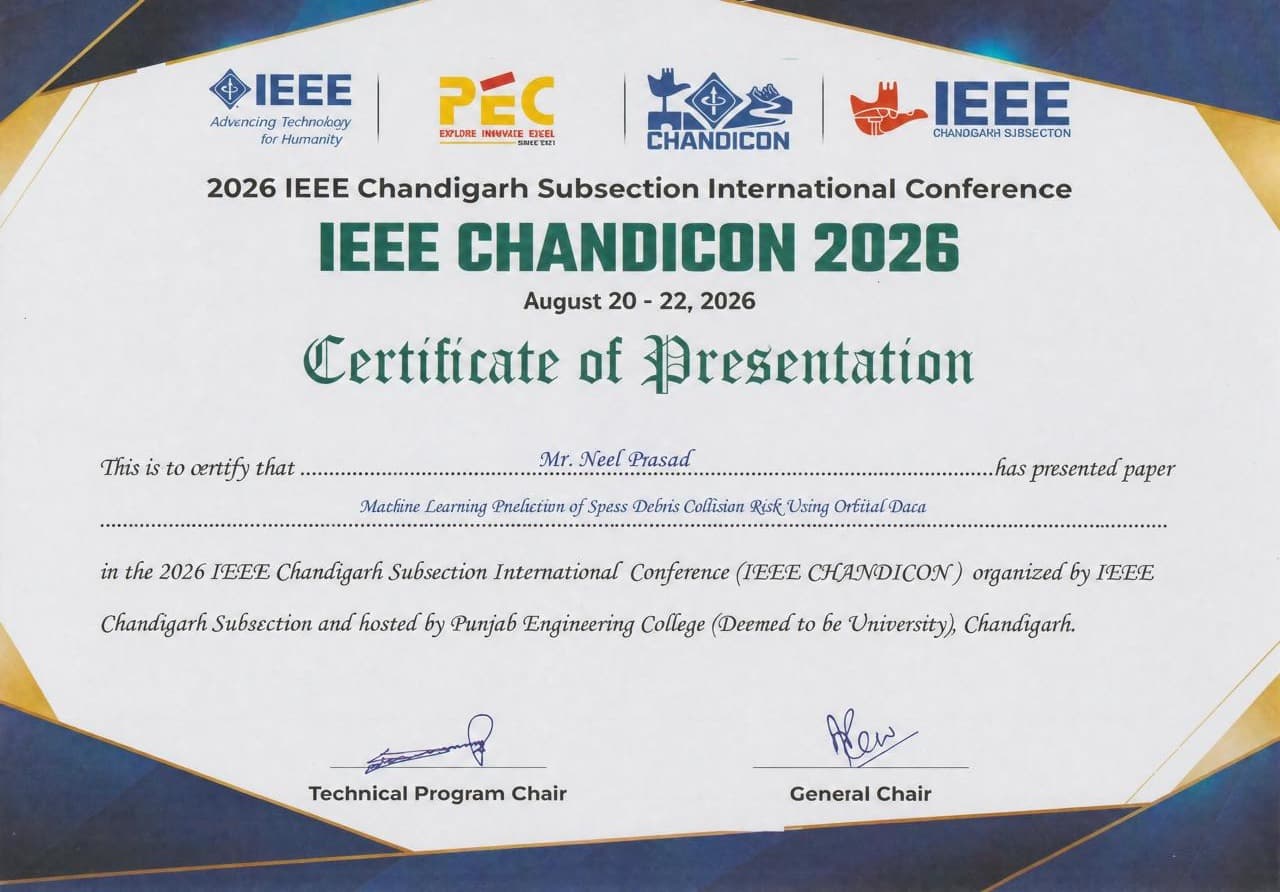
Predicting space debris collision risk with machine learning
A Random Forest and a Gradient Boosting model sort satellite collision cases into low-risk and high-risk using public orbital data. Both score 0.99, and orbital inclination mattered most.
Research assistant to Prof. Shwetadip Chowdhury, Chandra Family Dept. of ECE
Year-long research on a microscope that uses a smartphone screen as its programmable light source instead of an LED array, recovering phase and improving resolution.
Contributed to a GPU-accelerated iOS app in Swift and Metal for real-time phase retrieval and iterative reconstruction.
Helped integrate Metal compute shaders for 2D FFT, k-space windowing and pupil masking.
Helped validate the forward model across 225 illuminations, and supported a multi-app system that synchronizes lighting, camera triggering and image capture.